Noventa y Nueve: A Fun Card Game for Practicing Spanish Numbers

Published onOct 19, 2026 • • ViewTeaching Ideasblog posts
Numbers need a stupid amount of repetition.
Just because a student knew setenta y cuatro on a quiz three months ago doesn't mean they can process it quickly in real life. Prices, time, dates, ages, addresses, phone numbers, measurements, temperatures, scores. Numbers are everywhere, and students need to practice them.
But we can't keep giving students number worksheets for the next four years. We need something that gets them hearing, processing, and producing numbers over and over again, in a context where the numbers actually matter.
Enter Noventa y Nueve, a card game I taught back in 2013 that's absolutely worth bringing back.
What is Noventa y Nueve? It's a card game for 3–5 players that gives students repeated practice with Spanish numbers from 0–99. Players take turns adding cards to a running total and saying each new total in Spanish. The goal is to avoid being the player who pushes the total past 99. All you need is a regular deck of cards.
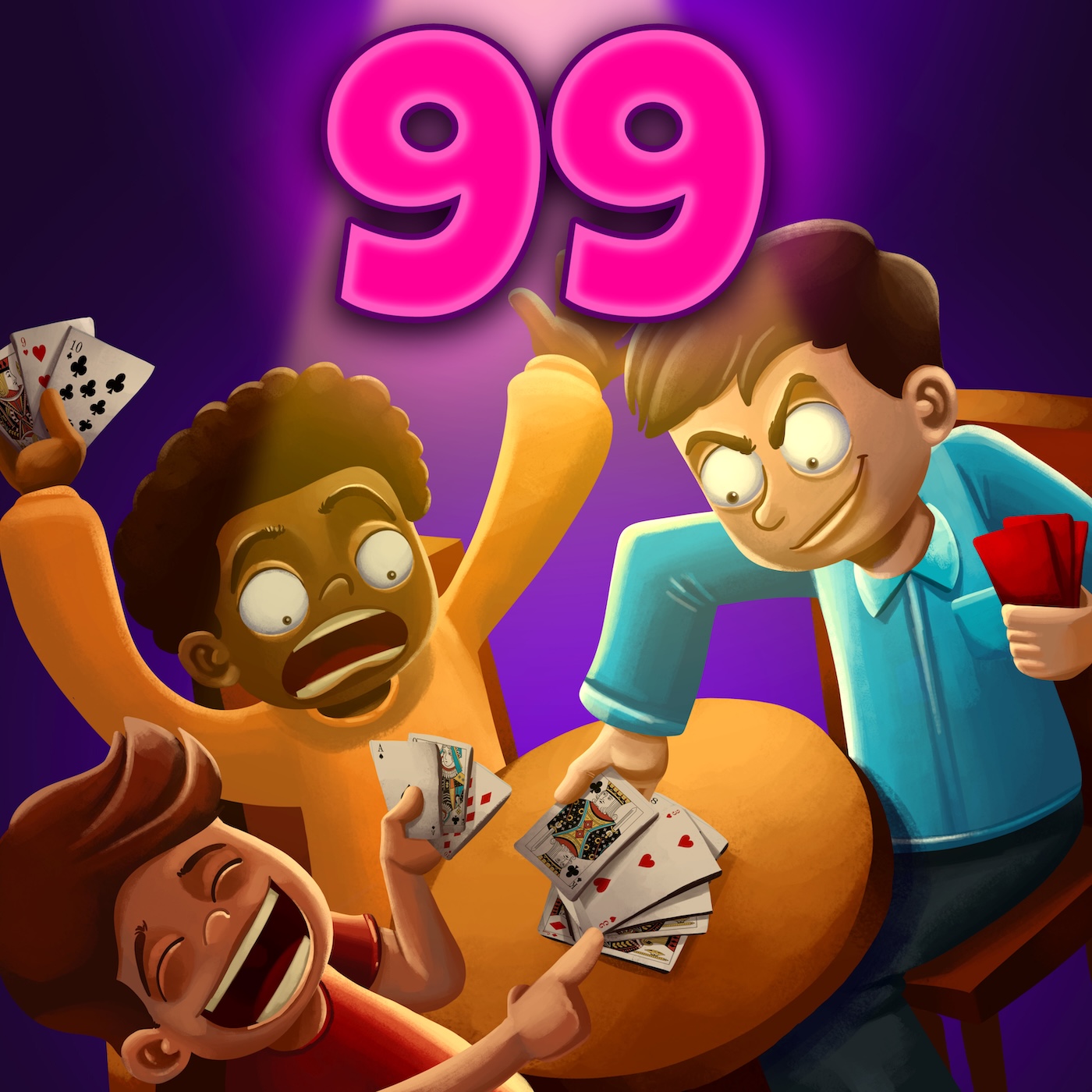
Illustration by Juan Carlos Pinilla
Rather watch than read?
If you're a video tutorial person, here's me playing this game with real students, including the special cards and how the game works. Heck, feel free to use this tutorial to teach your own students.
Prefer written instructions? See below.
Noventa y Nueve at a glance
| Best for | Spanish 1–3 |
|---|---|
| Practices | Numbers 0–99 |
| Players | 3–5 per group |
| Materials | Standard deck of cards, paper, pencils |
| Objective | Don't push the running total past 99 |
| Language requirement | Say every total in Spanish |
How to Set Up Noventa y Nueve
You need a regular deck of cards and a small group of students. I recommend 3–5 students per group. Fewer students means more turns, and more turns means more number practice.
Deal three cards to each player and put the rest of the deck face down in the middle. Students can look at their own cards, but shouldn't show them to anyone else.
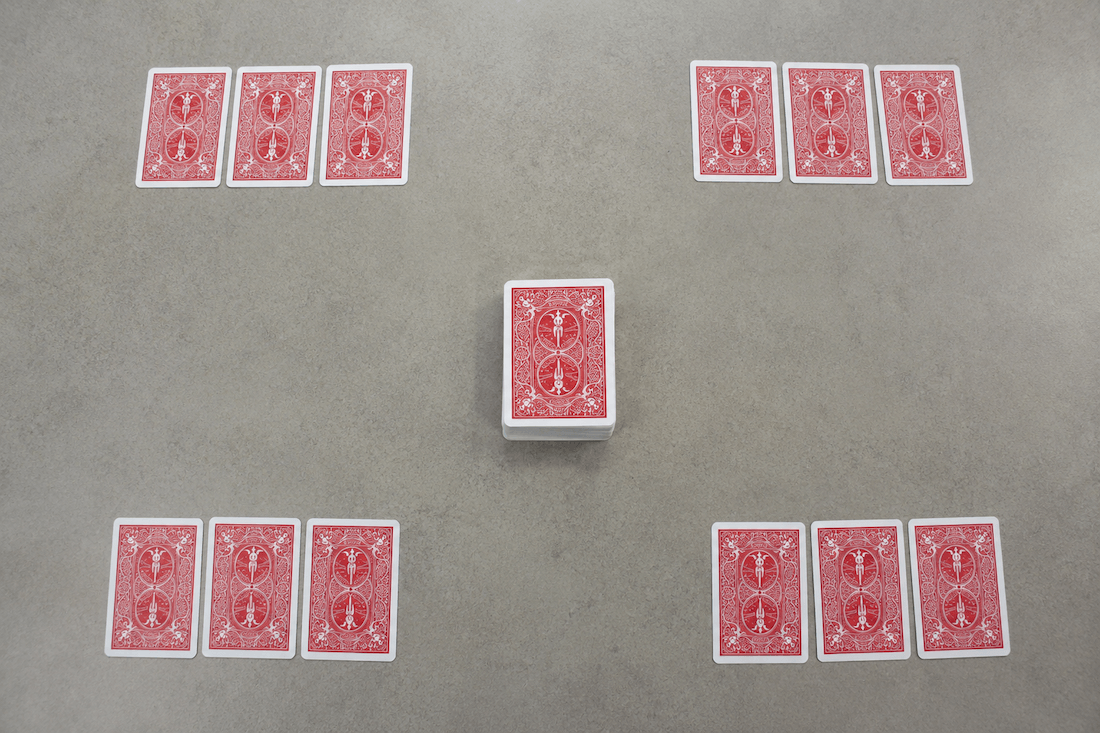
Cards are shown face down to illustrate the setup. Once dealt, students pick up their three cards and keep them hidden from the other players.
How to Play Noventa y Nueve
On each turn, a student:
- Plays one card from their hand onto the pile.
- Says the value of the pile in Spanish.
- Draws a new card.
Example: Three Turns of Noventa y Nueve
Player A puts down a 3 and says "tres".
Player B puts down a 5 on top of the 3. They say "ocho" since 3 + 5 = 8.
Player C puts down a 6, and says "catorce" since 6 + 8 = 14.
That's the key to the entire game: Students don't say the value of the card they play. They speak the current total of the pile.
How it ends
Don't be the person who passes 99.
- 97? You're fine.
- 98? Fine.
- 99? Still fine.
- 100 or more? You lose the round. Shuffle the cards and start again.
Now, at this point, Noventa y Nueve might seem like it would get tedious fast. Which would be true...
...if it weren't for the power cards.
Special Card Rules
A handful of cards don't play by the normal rules. And these are what turn Noventa y Nueve into an actual game.
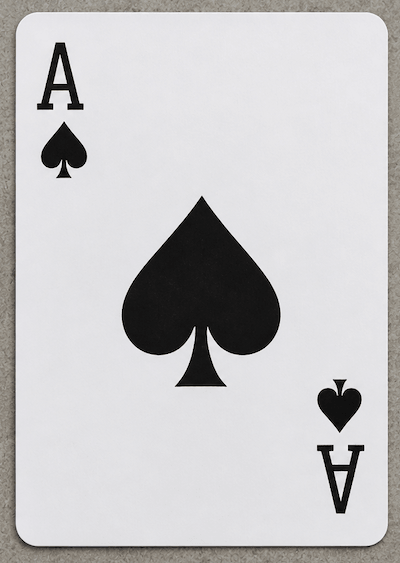
An ace is worth 1 or 11
You get to choose the value.
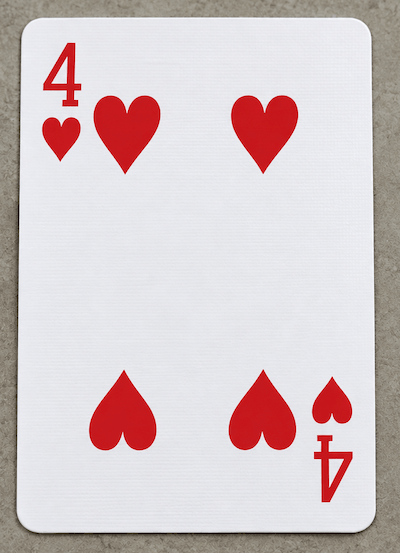
4 is worth zero points and reverses direction
The total doesn't change, but play reverses direction. So if somebody just handed you a particularly nasty number, you can send it right back to them.
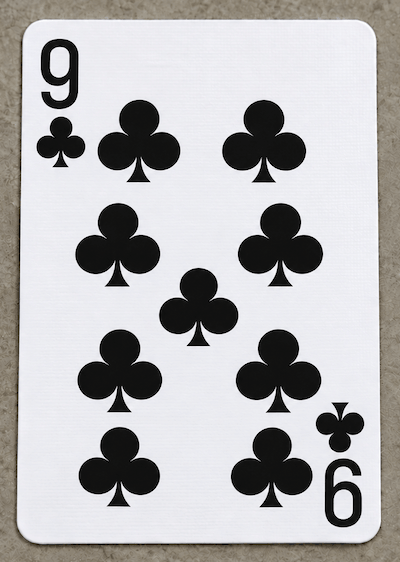
9 is worth zero points
The total stays exactly where it is. Doesn't sound very exciting until the pile is sitting at 97.
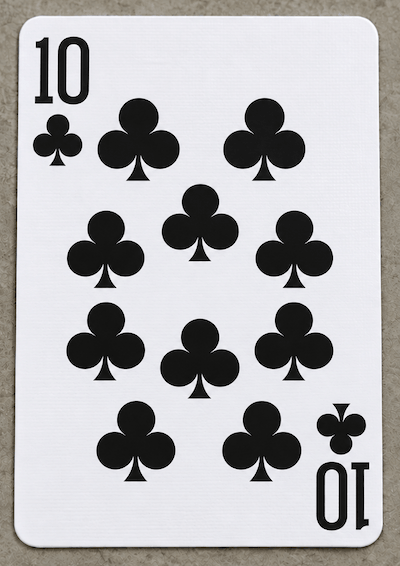
10 removes ten points
Instead of adding 10, you subtract it.
Is the pile getting nail-bitingly close to 99? Play a 10 to reduce it from 96 to 86, thereby giving yourself some breathing room.
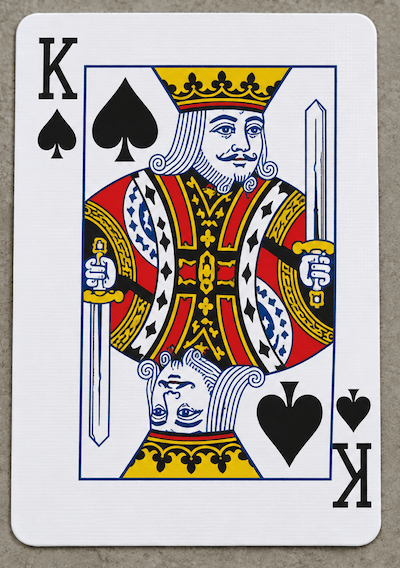
A King sets the pile to 99
The most powerful card in the game. It doesn't matter what the pile was worth before. Play a King and the total immediately becomes 99.
There is one important rule: you can't play a King on the first trip around the group. After that, Kings are fair game.
And yes, you can play a King on another King. The total just stays at 99.
Noventa y Nueve Card Values
| Card | Value |
|---|---|
| Ace | 1 or 11 |
| 2, 3, 5, 6, 7, 8 | Face value |
| 4 | 0, reverse direction |
| 9 | 0 |
| 10 | −10 |
| Jack, Queen | 10 |
| King | 99 |
A penalty for forgetting to draw
After playing a card and saying the new total in Spanish, draw a replacement card.
But there's a penalty if you forget to draw.
If you forget to draw before the next player takes their turn, you don't get to go back and draw afterward. You're now down to two cards.
And you're stuck with two cards for the rest of the round.
Forget again? Well... now you've got one.
If you have no cards in your hand when it's your turn to play again, you lose the round.
One thing I strongly recommend
Give every student their own sheet of paper and something to write with.
Every time someone says a number in Spanish, every student writes that number down in digits.
Someone says treinta y cinco? Everybody writes 35.
This solves a few problems at once.
First, it gives you a fantastic visual check of who's actually engaged. It also means students don't have to remember whether the last person said 63 or 73 while simultaneously processing Spanish, looking at their cards, and deciding what to play.
And then there's the math.
Yes, students have to add and subtract throughout the game. That's a nice little cross-curricular bonus. But some students struggle with mental math, and they're often way too proud to admit it.
And all it takes is one kid announcing, "I don't need to write it down. I can do it in my head," before somebody else feels like they should be able to do the same.
So I eliminate that pressure completely.
Everybody writes. Everybody keeps their own notes.
It doesn't matter whether you can do it in your head. You're taking notes.
How much Spanish?
That's entirely up to you.
When I first taught Noventa y Nueve, I'd let students use English for the first round or two while they figured out the rules. Once they got comfortable, I'd encourage them to play more of the game in Spanish.
Anytime we can create an environment where students speak almost entirely in the target language, that's a good thing. So we've created a free, one-page reference sheet with useful Spanish expressions and a numbers cheat sheet to help students keep the game going in Spanish.
You can handle that however makes sense for your students. There's really only one rule that matters: The numbers should always be spoken in Spanish.
That's the whole reason we're playing the game.
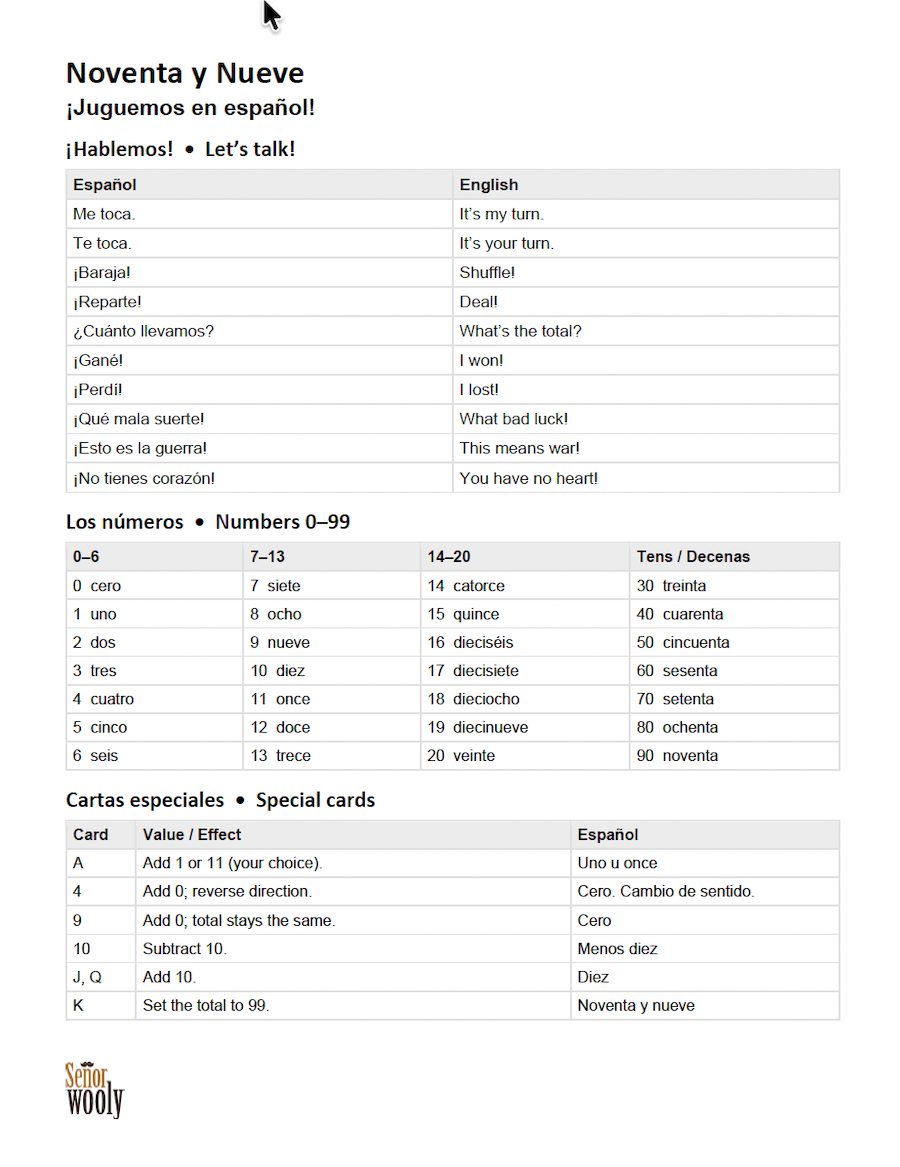
A one-page reference students can keep beside them while playing.
Free PDF. Print one copy per student.
Variation: Practice Spanish Numbers up to 990
There is a variation of this game where you can raise the ceiling from 99 to 990.
Basically, everything gets multiplied by ten. A 3 is worth 30. An 8 is worth 80. A 10 subtracts 100. And a King sets the pile to 990.
So yes, if your students need practice with numbers like 300, 500, 700, and 900, you absolutely can play that way.
But I recommend doing that with real hesitation.
Students simply don't encounter those upper numbers anywhere near as often as they encounter numbers from 0–100.
And there's a temptation, especially as students move into Spanish 2 and beyond, to think: They already learned 0–100. Time to move on.
Except knowing those numbers once isn't the same thing as having acquired them. Students need to be able to hear setenta y cuatro and process it quickly, without stopping to mentally reconstruct what it means.
That's where Noventa y Nueve gives you the most bang for your buck: tons and tons of repetition with the numbers students are going to hear and use the most.
So play to 990 if there's a reason to.
Just don't assume that bigger numbers automatically mean more advanced or more useful practice.
And then bring it back
Don't treat Noventa y Nueve as a numbers-unit activity that disappears once the quiz is over.
Bring it back.
Play it a month later. Pull it out when you have 15 minutes left. Use it when your Spanish 3 students somehow forget the number 57.
Because they will.
Numbers need to keep coming back. And if students need that much repetition, it might as well be fun.
Frequently asked questions
Can beginners play Noventa y Nueve?
Yes. Students need some familiarity with Spanish numbers, but you can explain the rules in English while requiring the running total to be said in Spanish.
How many students can play?
I recommend 3–5 students per group. Smaller groups mean more turns, and more turns mean more number practice.
Do students need to speak Spanish throughout the game?
No. That's up to you. But every running total should always be spoken in Spanish. Our free conversation and numbers cheat sheet can help students use more Spanish throughout the game.
Can you play Noventa y Nueve with higher numbers?
Yes. Multiply the card values by ten and play to 990. I still recommend prioritizing fluency with 0–99, since students encounter those numbers much more often.
About the author
Jim Wooldridge is the creator of Señor Wooly and a former Spanish teacher with 11 years of classroom experience. He creates stories, music, and activities to help students acquire Spanish.


